
· Technical Hiring · 2 min read
Signal vs Noise in Technical Hiring – Why Clarity Drives Speed
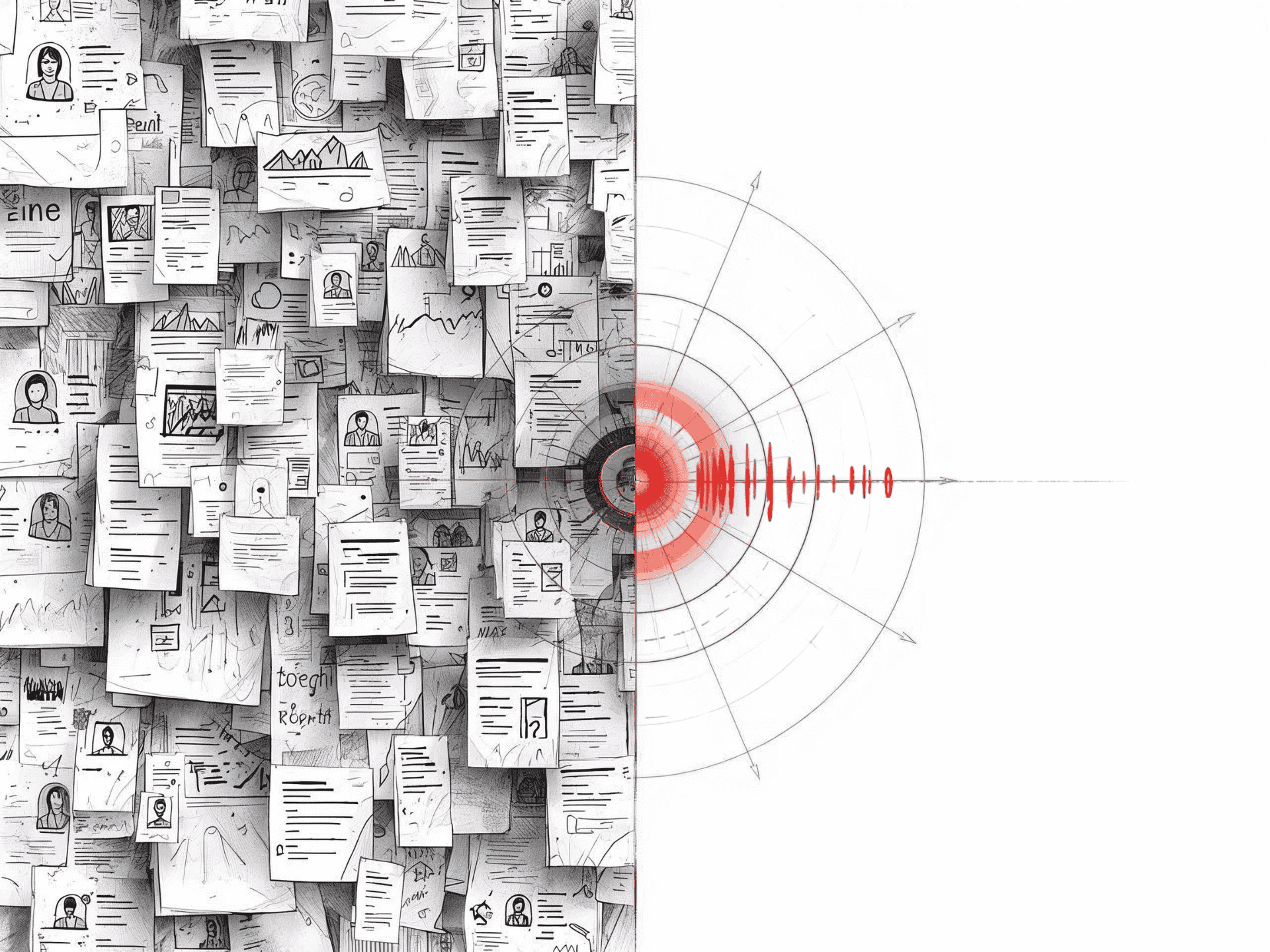
One of the biggest myths in technical hiring is that more sourcing equals faster results. In reality, high-volume sourcing often creates the exact opposite outcome — more friction, longer time-to-hire, and lower confidence in decisions.
Karat’s data shows that 88% of sourced technical candidates never even reach a technical interview. Glassdoor reports that 75% of résumés are rejected by keyword-based filters, while 42% of the résumés that do pass still end up being rejected after engineering review.
LinkedIn’s Talent Trends survey points out that nearly 60% of recruiters add candidates to the pipeline “just in case” because the role expectations aren’t clear enough from the start.
That’s not a sourcing problem — that’s a clarity problem.
At Tribera, we don’t optimise for volume — we optimise for signal. Before any sourcing begins, we define what evidence of ability looks like for that specific context, and use structured assessments and contextual human judgement to surface only the candidates who actually belong in the conversation.
When teams work this way, everything moves faster. Korn Ferry found that structured, contextual evaluation reduces time-to-hire by 27% and improves offer acceptance by 32%, and LinkedIn reports a 48% increase in hiring-team confidence.
Technical hiring doesn’t need more CVs — it needs more truth.